
LAPP Renewable Energy Webinar: Cables and Connectors for Solar, Wind, and BESS
Download the
Engineering Spec Pack
LAPP RENEWABLE ENERGY WEBINAR: CABLES AND CONNECTORS FOR SOLAR, WIND, AND BESS
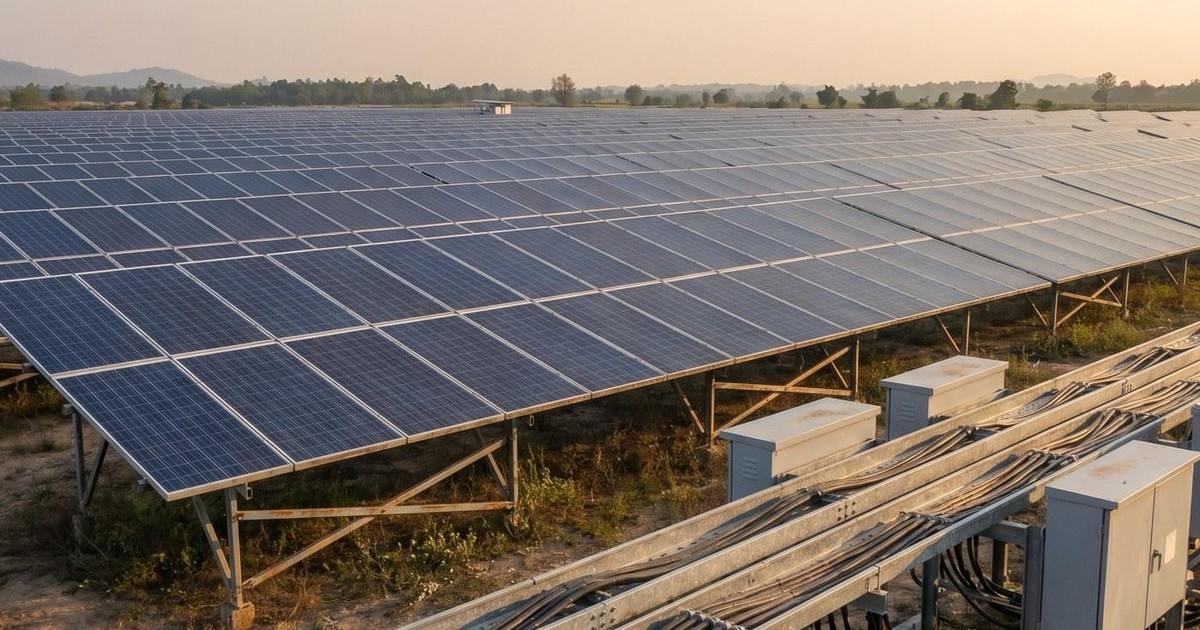
What cables and connectors does a renewable energy project actually need across solar, wind, and battery storage? Solar PV projects need UV and ozone-rated DC cables (the ÖLFLEX® SOLAR XLWP family or other IEC 62930-rated solar DC cables) terminated with MC4-compatible DC connectors rated for the system voltage, typically 1,500 V DC. Wind projects need torsion-rated cables for the nacelle loop, tower wiring matched to the installation environment, and balance-of-plant cabling specified to the project’s design standards. Battery storage projects need interconnect cables sized for the BESS cabinet busbar layout and rated for the operating ambient. Across all three, cable and connector failures are easily underestimated and can carry disproportionate downtime, rework, and warranty exposure. Specifying the connectivity layer to the same engineering standard as the rest of the system prevents that. Start from the LAPP SEA renewable energy industry page for the full scope.
For project engineers, EPC contractors, and asset owners across ASEAN, LAPP makes cables AND connectors for each layer of a renewable energy project under one engineering programme. ÖLFLEX® SOLAR for the DC string side, EPIC® SOLAR for MC4-compatible terminations, torsion-rated cable variants for wind nacelle and tower runs, and interconnect cabling specified for the BESS cabinet environment. The upcoming LAPP renewable energy webinar walks through how to specify each layer for ASEAN conditions. Registration details are at the end of this article.
Which Cable Failures Cost Renewable Projects the Most Money?
Renewable energy content tends to focus on inverters, panels, and turbines. Cables and connectors are treated as commodity line items until something fails, and when it does, the failure can sit in the cable or the joint as often as in the inverter or the panel.
Three failure modes stand out across the projects ASEAN EPCs have shipped in the last five years.
Solar DC cable degradation under UV and ozone. Solar DC cables specified to office-cable or generic LV standards can degrade prematurely under continuous UV exposure and tropical ozone profiles. The cost is not the cable itself;, it is the re-pull across thousands of strings when degradation shows up at the joint or the conduit entry.MC4 connector mismatch. MC4 connectors from different brands look interchangeable. Mixing unapproved combinations can create test, safety, and warranty-compliance issues if a joint overheats or fails an electrical safety inspection. The Feb W3 piece on solar DC connectors covers the MC4 compatibility decision in more depth.
Wind turbine torsion-cable failure at the loop. Wind turbines yaw, which means cables in the nacelle loop see torsion and bend cycles. A standard control cable substituted for a torsion-rated cable can fail at the loop before the first major service interval.
The connectivity layer in renewable energy carries operational and warranty risk that scales with project size. A 50 MW solar plant has more strings, more joints, and more places a marginal cable choice can show up later.
How Do Solar DC Cables Differ from Standard Industrial Cables?
Solar DC cables are not industrial cables with a label change. The construction differs in three ways that matter for project specification.
UV and ozone rating. Solar DC cables are typically constructed with a cross-linked polymer outer sheath rated for direct outdoor exposure to UV and ozone over a decade-plus design life. Office and standard industrial cables are not rated for this environment.
DC voltage class. Modern utility-scale solar plants run 1,500 V DC strings. Cable insulation has to be rated for the actual DC class, not for the AC voltage class that the same conductor cross-section would normally cover. The LAPP SEA ÖLFLEX® SOLAR search on the eShop shows the variants typically specified across ASEAN.
MC4-compatible termination. Solar string terminations are typically MC4 male and female DC connectors. The cable specification has to match the connector’s accepted conductor cross-section and crimp window. Mixing connector brands on a single string requires confirmation against the connector manufacturer’s approved mating pairs list. The EPIC® SOLAR DC connectors category sets out the LAPP MC4-compatible options.
For an ASEAN solar EPC, specifying ÖLFLEX® SOLAR XLWP with EPIC® SOLAR connectors means the cable cross-section, the conductor temperature class, and the connector crimp window are designed against the same engineering reference. The string is not assembled across two suppliers’ tolerances.
What Should You Specify for Wind Turbine and BESS Cabling?
Wind and battery storage need different cable families than solar, and the failure modes are different too.
Wind side. Nacelle-loop cables see continuous yaw motion and torsion cycles. The specification keyword is torsion-rated, not just flexible. Tower wiring sees vibration but typically not torsion, and balance-of-plant runs are closer to standard industrial cabling. LAPP’s wind-cable portfolio covers nacelle, tower, and balance-of-plant roles, with the matching cross-section and shielding scheme set against the actual turbine design. Browse the renewable energy wind APAC page for the product scope.
BESS side. Battery storage cabinets carry high-current DC interconnect between modules, between the cabinet and the inverter, and between the inverter and the grid tie. The cable cross-section is dictated by the cabinet busbar layout, the operating ambient temperature inside the cabinet, and the BMS-side signal cabling that runs alongside. BESS interconnect is often the last item specified after busbars and switchgear are locked in, which leaves less room for proper cable management. Front-loading the cable selection into the BESS cabinet design phase avoids the squeeze.
The Mar W3 renewable energy connectivity toolkit covers the selection logic across solar and wind in more depth.
Register for the LAPP Renewable Energy Webinar
The upcoming LAPP renewable energy webinar walks ASEAN project engineers and EPC contractors through the process of how cables and connectors for solar, wind, and BESS projects. The agenda includes worked examples for tropical operating conditions and ASEAN code requirements. Topics include ÖLFLEX® SOLAR family selection for 1,500 V DC strings, EPIC® SOLAR MC4-compatible termination decisions, torsion-rated cable selection for wind nacelle loops, and BESS interconnect specification against cabinet layout.
Register for the webinar through the LAPP APAC webinar hub. If you cannot attend live, talk to our connectivity specialists at e.lapp.com/apac/contact or through the LAPP SEA enquiry form. We can scope the cable and connector mix that matches your build.