
Cable Strategy for Battery Manufacturing and BESS Assembly: Specifying From Cell to Grid-Tie

Download the
Engineering Spec Pack
CABLE STRATEGY FOR BATTERY MANUFACTURING AND BESS ASSEMBLY: SPECIFYING FROM CELL TO GRID-TIE
A battery cell manufacturing line needs cables that tolerate dry-room dewpoint, solvent exposure during electrolyte filling, and the duty cycle of formation and ageing equipment that often runs continuously. The typical cable groups inside a gigafactory are ÖLFLEX® FD and SERVO class cables for drive and motion on coating, calendering and formation equipment, UNITRONIC® for control and instrumentation, and SKINTOP® cable glands rated for dry-room and solvent-adjacent zones where the application requirements are confirmed. On the BESS side of the value chain, the governing standards and installation conditions differ, but a consistent specification discipline can be applied: low-smoke zero-halogen jackets, flame-retardant variants where the safety case and local code demand them, and a cable schedule that gets locked in alongside cabinet and busbar selection rather than after them.
Most battery content treats cell manufacturing and BESS integration as separate problems. In specification terms they share more discipline than the industry usually acknowledges. This guide walks the cable selection from the factory floor that builds the cells to the BESS cabinet that integrates the finished packs, and shows where LAPP cables, glands, and connectors span both ends of the value chain.
Which Cables Belong on a Battery Cell Manufacturing Line?
A battery gigafactory runs several distinct process environments, each with a different cable requirement.
Electrode coating and calendering. These processes drive high-speed rollers and coating heads under variable-frequency drives. The cable category here is ÖLFLEX® FD class for flexible continuous-motion service, with oil and coolant resistance depending on the specific process chemistry. Drive cables run at high switching frequencies from VFDs, which means shield termination to the drive cabinet matters for EMC compliance.
Cell formation and ageing. Formation equipment charges and discharges cells at defined current profiles, often running 24 hours a day on high-utilisation factory lines. The cables serving formation cyclers need to handle the duty cycle and thermal load of near-continuous operation.
Electrolyte filling and handling. Electrolyte is a solvent. PVC-jacketed cable degrades when exposed to the solvents used in electrolyte formulations. The right jacket specification depends on the specific solvent chemistry, but the general direction is away from standard PVC and toward jackets with confirmed solvent resistance, such as TPE or PUR, selected against the application.
Dry rooms. Battery dry rooms run at dewpoints that can reach -40°C or lower in advanced cell chemistries. Standard PVC jacketing absorbs moisture over time and can shed particulates, both of which are problems in a dry-room environment. Cable jacket selection for dry rooms requires a confirmed material specification against the room class and cell chemistry.
Control and instrumentation across all these zones runs on UNITRONIC® cabling, which covers bus, fieldbus, and instrumentation categories with screened variants for the EMC-intensive forming and drive areas.
The LAPP machine makers and plant engineering page covers the broader manufacturing context, including applications where ÖLFLEX® and UNITRONIC® cables are specified alongside SKINTOP® glands.
How Should Cabling Be Specified for Dry Rooms and Electrolyte Zones?
The three variables that drive cable specification in a battery factory are jacket material, dust-shedding characteristics, and ingress-protection class at the gland.
Jacket material determines solvent resistance and particulate shedding. In electrolyte zones, the confirmation process is: identify the specific solvent compounds in the electrolyte formulation, request a materials compatibility check from the cable supplier, and document the result in the cable schedule. Generic claims of chemical resistance without compound-specific confirmation are not sufficient.
Dust-shedding in dry rooms is a function of jacket material and outer surface texture. Rough-textured jackets shed more particulates when flexed or dragged across cable trays. Smooth-jacketed PUR or TPE cables are the standard direction for dry-room installations, but the confirmation against the room class is the specifier’s responsibility.
Cable gland selection in these zones follows from the cable jacket and the installation environment. SKINTOP® cable glands are available in brass, stainless steel, and polymer variants across IP54 through IP68 ratings under IEC 60529. The gland rating holds when the installed cable OD is within the gland’s specified acceptance range. Over-specifying the gland (stainless steel in a dry-room zone that only needs IP54) adds cost without benefit. Under-specifying it creates ingress risk at the panel entry.
What Changes for Cable Selection When You Move From Cell Production to BESS Cabinets?
The short answer: the governing standards and failure-mode hierarchy shift, even though the specification discipline stays the same.
Inside the manufacturing line, the dominant cable risk is premature wear from mechanical cycling, VFD harmonics, or chemical exposure. The cable fails, and the production process stops.
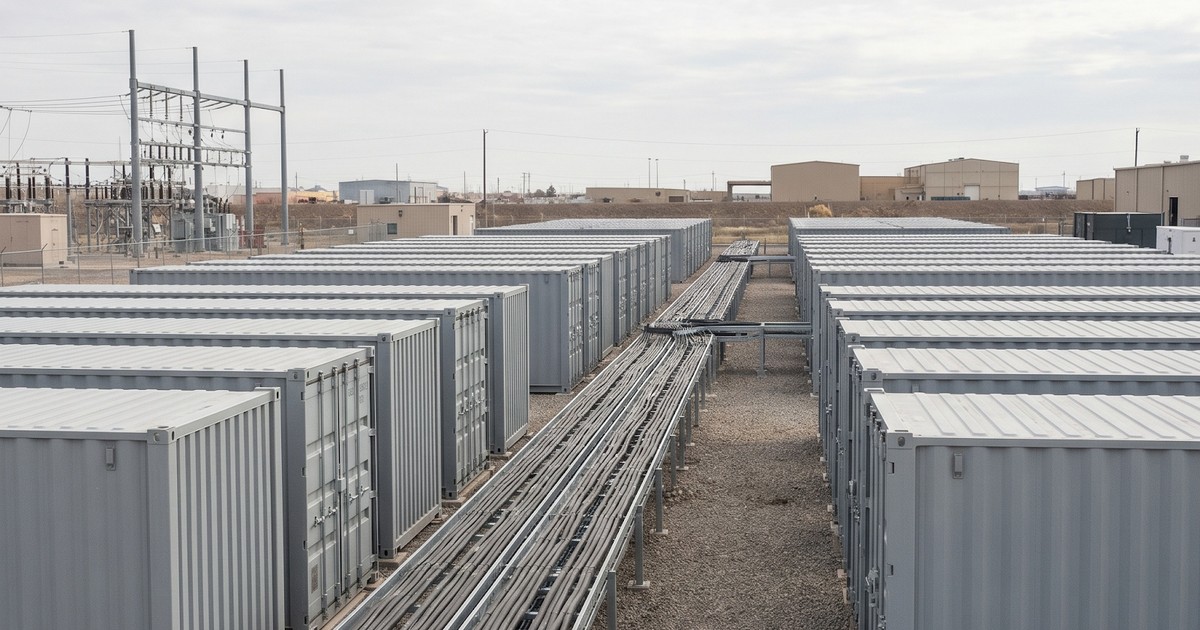
Inside a BESS cabinet, the dominant cable risk is fire or thermal runaway propagation. A cable failure inside a BESS is not just a downtime event. It is part of the safety case for the system. This changes two things in the specification:
Fire performance class. BESS installations increasingly specify LSHF (low-smoke halogen-free) or LSZH cables inside the cabinet, particularly in enclosed or semi-enclosed locations where evacuation or fire suppression response matters. The specific fire performance class (IEC 60332, IEC 60754, IEC 61034) depends on the safety case and the applicable local code.
Cable schedule timing. In BESS projects, the cable schedule is often the last item locked in. This is the wrong sequencing. Grid-tie cables from the transformer to the inverter carry the full system charge and discharge current at the highest-voltage level in the DC string. Upsizing these cables after the switchgear is installed is expensive and sometimes not possible. The LAPP renewable energy page and the RE Connectivity Toolkit blog cover grid-tie cabling selection in the solar and BESS context.
The battery connector range at LAPP APAC also covers EPIC® BATTERY connectors (120A, 250A, and 350A variants available in the APAC eShop) for the high-current interconnect layer inside the BESS cabinet, where field-replaceable connectors simplify module-level service.
Talk to Our Engineers
LAPP supplies cables AND connectors for the manufacturing lines that build battery cells and for the BESS systems that integrate them. ÖLFLEX®, UNITRONIC®, and SKINTOP® cover the factory floor; LSHF variants and EPIC® BATTERY connectors cover the BESS cabinet.
Our connectivity specialists can review your cable schedule against the application requirements for your battery line or BESS project. Talk to our engineers at jj-lapp.com/contact-us/ or visit jj-lapp.com/industries/renewable-energy/ to see the full renewable energy cable programme.