
AI Data Centre Connectivity: Power and Cabling for High-Density GPU Racks
Download the
Engineering Spec Pack
AI DATA CENTRE CONNECTIVITY: POWER AND CABLING FOR HIGH-DENSITY GPU RACKS
What changes for power and support cabling when an AI training rack pushes past conventional enterprise density? Power distribution often requires higher-capacity feeders than conventional enterprise racks, with exact sizing dictated by rack load and facility design. Copper cabling stays in use for management, control, and shorter network links, while high-speed inter-rack fabrics typically move to fibre or direct-attach architectures depending on switch and server design. LSZH cable is commonly specified in data centre environments, subject to site code, and cable routing must preserve the airflow geometry that high-density racks depend on for cooling. The LAPP SEA data centre industry page and the companion piece on data centre cabling for high-density racks cover the foundation this article builds on.
For data centre design engineers, AI infrastructure architects, and electrical contractors across ASEAN, LAPP’s product fit in this build is on the power and support side, not the high-speed inter-rack fabric. LAPP makes cables AND connectors from one supply chain, so ÖLFLEX® feeders pair with EPIC® or SKINTOP® terminations under the same engineering envelope. ETHERLINE® cables cover management-network and shorter copper links, and LAPP Harnessing Solutions covers pre-assembled cable assemblies where repeatable rollouts matter. LAPP SEA supplies these in ASEAN with regional stock, working alongside specialist network vendors on the 100, 400, and 800 Gigabit fabric side, which is intentionally outside LAPP’s scope here.
What Changes for Power and Support Cabling in High-Density AI Racks?
Three things change at the rack edge when moving from conventional enterprise loads to AI training and GPU colocation profiles.
The first is per-rack power. AI builds tend to draw more current per rack than conventional enterprise loads, with the exact figure dictated by GPU count, accelerator generation, and facility power provisioning. This changes feeder cross-section, busbar specification, and the number of distribution circuits a rack needs. Sizing is a facility-specific calculation, not a single industry-wide number.
The second is the role of copper inside the rack. High-speed inter-rack fabrics increasingly move to fibre or direct-attach copper architectures driven by switch and server design choices. Copper patch cords remain in use for management network, BMC and IPMI runs, and shorter intra-rack links. Specifying the right ETHERLINE® Cat.6A or Cat.7 patch cord for the management-network role is a different decision from specifying the fibre or DAC trunk between racks. Browse the ETHERLINE® Cat.6A options on the LAPP SEA eShop for the products covered by LAPP’s data communication catalogue.
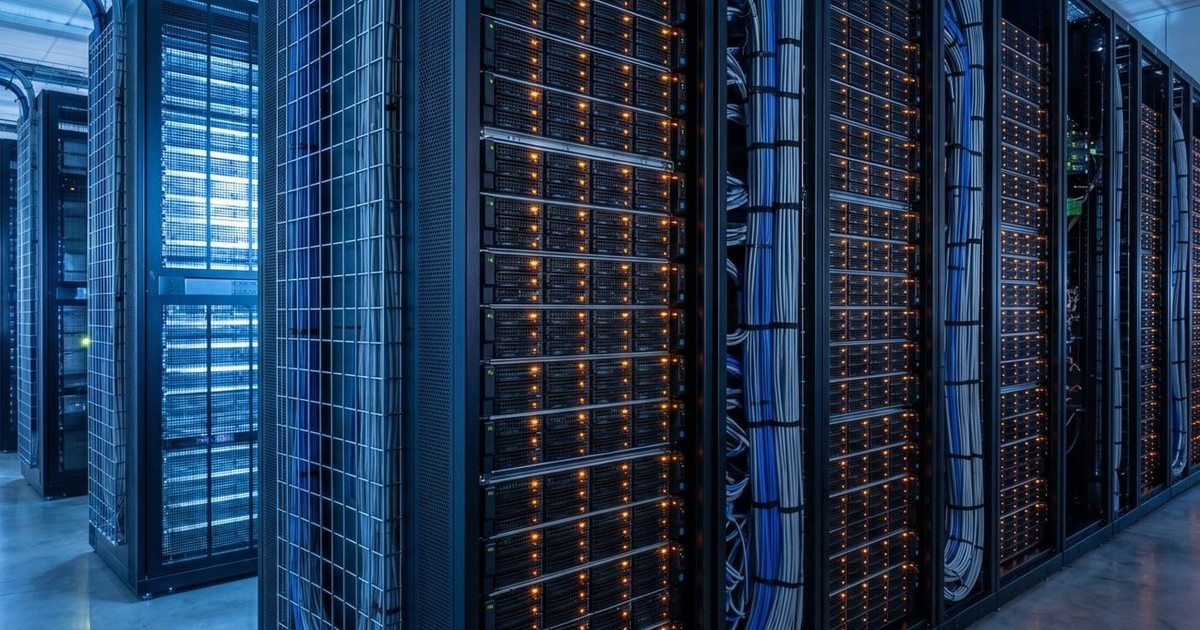
The third is the cable routing envelope. High-density racks depend on engineered airflow to keep GPU temperatures in spec. Any cabling that blocks airflow at the rack edge or the rear plenum can compromise cooling capacity. Cable management has to leave the airflow geometry that the rack and the row were designed for intact.
How Do You Stop EMI Between High-Current Power and AI Network Cables?
Higher-current power feeders running close to data lines is the EMI risk profile that high-density racks introduce. The classic mitigations apply, with a few specifics worth calling out for AI builds.
Separation. Maintaining minimum separation between power and data cable runs is the first line of defence. Where rack space does not allow generous separation, parallel runs of power and data should be kept short, and crossings should be at right angles. This is not new advice, but easier to violate when the rack is dense.
Shielding. Shielded data cabling on the runs that cannot be routed away from power is the second line. ETHERLINE® Cat.6A and Cat.7 industrial Ethernet cable types are available in shielded constructions for environments where unshielded patch cords are not adequate.
Power-side construction. Feeder cable construction also matters for the radiated noise side of the equation. Power and control cable selection for the feeder runs should match the current and the install environment, with cross-section, insulation, and outer sheath chosen against the actual application. The LAPP power and control cables catalogue lists the products available for these runs, and the LAPP SEA eShop power and control search is where ASEAN specifiers look up regional stock.
Grounding. A clean grounding scheme is the third line, and it cuts across both power and data cable selection. Shield termination, equipment bonding, and the path from rack ground to facility ground all matter for what EMI shows up at the data layer.
Where LAPP Fits in a High-Density Rack: Power, Management Cabling, and Pre-Assembled Harnesses
LAPP’s product fit in an AI rack sits on the power-and-support side of the cable mix, not the high-speed inter-rack fabric.
On the power side, ÖLFLEX® cables cover rack feeders and intra-rack power distribution. The catalogue covers the constructions, conductor cross-sections, and insulation systems typically specified for industrial and data centre power runs. The actual SKU depends on the facility’s voltage, current, and code requirements, which the LAPP industries-and-solutions overview and the per-product catalogue page set out.
On the management copper side, ETHERLINE® cables cover the Cat.6A and Cat.7 patch and link runs typically used for BMC, IPMI, and management network connections. Where shorter higher-speed copper links are required inside the row, Cat.8 ETHERLINE® options are available. The LAPP data communication systems catalogue lists the product families and shielding options.
On the assembly side, LAPP Harnessing Solutions covers pre-assembled cable assemblies for repeatable rollouts. The cable, the connector, and the assembly come from one supply chain, so the harness ships as one tested unit. For ASEAN data centre operators rolling out a row of identical racks, the savings on commissioning time and rework come from factory-tested harnesses, not field-built runs.
What LAPP is not specifying here is the inter-rack high-speed fabric. 100, 400, and 800 Gigabit interconnect, optical transceivers, and direct-attach copper trunks are specialist network vendor territory. The role of this article is the power-and-support cable mix that sits underneath.
What Should You Future-Proof for in Cable Management: Higher Loads, Liquid Cooling, or Routing Density?
The future-proofing question is not abstract. AI rack density is on a trajectory that will be different on the next facility refresh, and the cable management strategy chosen today should leave room for that.
Higher loads. Per-rack power draw is trending up across the AI hyperscale and colocation side, and the cable management infrastructure has to leave headroom for higher-capacity feeders without rework. Designing the cable trays and cable ladder paths for the next step up in current rating, not just today’s, is the practical way to handle this.
Liquid cooling. Many AI builds are moving from air-only to hybrid liquid-air or direct-to-chip liquid cooling. Cable routing has to anticipate liquid distribution piping, manifold service access, and the rear-plenum geometry liquid-cooled racks introduce. Cable management designed against an air-only assumption will be in the way when the liquid distribution gets installed.
Routing density. As fibre takes on more of the inter-rack fabric load, the management copper runs do not go away, they consolidate. The pathways still need to support the patch cord count while leaving service access for the fibre and direct-attach runs that share the same trays. The LAPP APAC industries and solutions hub is a starting point for matching product families to deployments.
Talk to Our Engineers
If you are specifying cabling for a new AI training rack, GPU colocation row, or hyperscale expansion in ASEAN, talk to our engineers. We can size ÖLFLEX® power feeders, scope ETHERLINE® management copper, and where it fits, package rack-side runs through LAPP Harnessing Solutions for factory-built assemblies. We defer to your network vendor on the 100, 400, and 800 Gigabit fabric, and focus on the power-and-support side.
Reach the LAPP APAC team at e.lapp.com/apac/contact, or start from the LAPP industries and solutions hub to scope the cable mix that matches your build.