
Servo Motor Cables: Selection Guide for CNC, Packaging, and Robotics
Download the
Engineering Spec Pack
SERVO MOTOR CABLES: SELECTION GUIDE FOR CNC, PACKAGING, AND ROBOTICS
Servo motor cables for CNC, packaging, and robotics applications require low-capacitance insulation, high-coverage EMC shielding, and flex ratings matched to the application — drag chain (high-cycle movements), torsion (±360° for robotic arms), or fixed installation. The ÖLFLEX® SERVO FD 796 CP provides low-capacitance power delivery with tinned-copper braid shielding for drag chain applications, while LAPP’s ÖLFLEX® ROBOT range handles the combined bending and twisting of articulated robots. Choosing the right servo cable prevents premature failure, reduces EMI interference, and protects your drives from voltage stress.
These aren’t theoretical concerns. In high-speed packaging machines cycling 24/7, a standard cable rated for 1–2 million flex cycles will fail within months. In robotic welding cells, torsion stress destroys cables rated only for single-plane bending. And in CNC machining centres, poor shielding causes encoder position errors that result in scrapped parts. This guide covers the selection criteria and LAPP cable solutions for each application.
What Makes Servo Motor Cables Different from Standard Power Cables?
Standard power cables deliver electricity. Servo motor cables do that while withstanding the electrical, mechanical, and electromagnetic demands of high-speed motion control. Here’s what sets them apart:
• Low-capacitance insulation — High-capacitance cables cause leakage currents that trip residual current devices and degrade signal integrity. Servo-rated cables use XLPE or specialised insulation to minimise capacitance.
• EMC shielding — PWM drives generate high-frequency noise that interferes with encoders and nearby equipment. Servo cables use tinned-copper braid shields to contain electromagnetic interference.
• Flex-rated construction — Standard cables fracture after thousands of flex cycles. Servo cables engineered for drag chains withstand millions of cycles at high accelerations.
• Voltage transient resistance — Modern drives with fast-switching IGBTs produce voltage spikes (dV/dt) that destroy standard insulation over time. Servo-rated insulation is designed for these transients.
If your application involves any form of continuous movement — whether CNC axes, pick-and-place arms, or robotic cells — standard cables will fail. It’s a question of when, not if.
How Do You Select Servo Cables for Drag Chain Applications?
Drag chains are the most common cable management system in CNC machines and packaging lines. The cable flexes in a defined radius as the machine axis travels back and forth. Here are the key selection criteria:
• Flex cycle rating — Match the cable’s rated flex cycles to your application’s duty cycle. High-speed packaging machines may run millions of cycles per year. LAPP’s ÖLFLEX® SERVO FD 796 CP is engineered for continuous power chain operation in demanding applications with high travel speeds and accelerations.
• Travel distance — Longer travel increases cable stress. The FD 796 CP supports extended travel distances, covering most CNC gantry and packaging conveyor applications.
• Bend radius — Ensure the cable meets your chain’s minimum bend radius requirement. Tighter bends demand smaller conductor cross-sections or more flexible sheath materials.
• Chemical exposure — Machining environments involve coolants, lubricants, and cutting oils. The FD 796 CP features a polyurethane (PUR) outer sheath that is oil-resistant, abrasion-resistant, hydrolysis-resistant, and rated for operation from -40°C to +90°C.
• Shielding — For drag chain servo applications, screened variants (designated “CP”) with tinned-copper braid provide EMC protection throughout the cable’s flex life.
LAPP offers both power cables (ÖLFLEX® SERVO FD 796 CP/P) and matched encoder/feedback cables (ÖLFLEX® SERVO FD 798 CP) designed to work together in the same drag chain. This ensures electrical compatibility between the power and signal paths — a common failure point when mixing cables from different manufacturers. Both cable types carry UL/CSA AWM certification, meeting European and North American compliance requirements for global machine builders.
ÖLFLEX® SERVO Range: Power, Feedback, and Hybrid Solutions
LAPP’s ÖLFLEX® SERVO range covers three performance tiers, each matched to specific application demands:
• Basic Line — Cost-effective cables for static or slow-moving applications with minimal environmental stress. Suitable for fixed installations where the cable remains stationary after commissioning.
• Core Line — Engineered for dynamic applications with moderate flex requirements. Standard drag chain and robotic applications where the cable experiences regular but not extreme movement.
• Extended Line — The high-performance tier for demanding environments: high acceleration, extended travel distances, harsh chemicals, and extreme temperatures. The ÖLFLEX® SERVO FD 796 CP sits in this class.
Key products for machine builders:
ÖLFLEX® SERVO FD 796 CP: Screened power cable for drag chains. 1000 V rated, UL AWM Style 20234 certified (cULus), PUR sheath, -40°C to +90°C. Available in cross-sections from 1.5 mm² to 16 mm².
ÖLFLEX® SERVO FD 798 CP: Matched encoder/feedback cable for drag chains. UL AWM Style 20236 certified. Pairs with the FD 796 CP for complete servo connections.
ÖLFLEX® SERVO 7TCE: Multi-listed flexible servo cable with TPE sheath and UL TC-ER certification. Ideal when North American tray cable ratings are required.
ÖLFLEX® CONNECT SERVO: Pre-assembled servo cable solutions with cables and connectors matched by LAPP engineers. Eliminates assembly errors and reduces commissioning time.
All LAPP servo cables comply with IEC 60332-1-2 flame retardance, UL VW-1, and CSA FT1 standards. For modular machine interfaces, LAPP’s EPIC® industrial connectors provide standardised plug-and-play connections for servo drives, enabling faster machine assembly and field-serviceable connections.
What Cables Work for 6-Axis Robotic Arms?
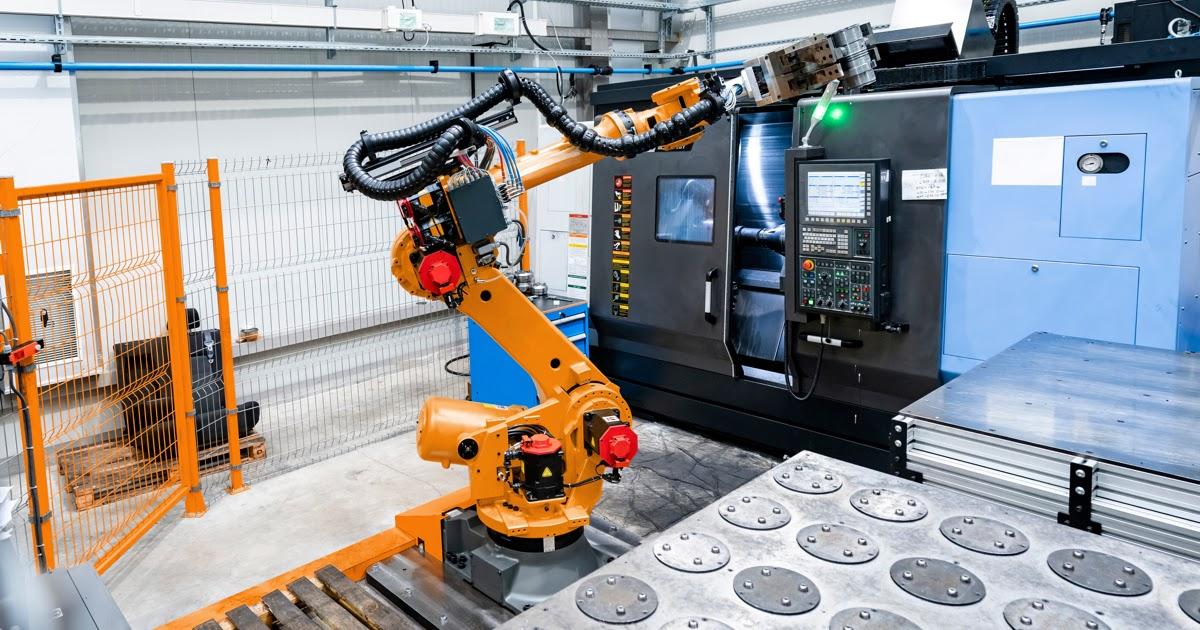
Robotic arms present a unique challenge: the cable must handle combined bending AND twisting (torsion) simultaneously. A 6-axis robot twists cables ±180° to ±360° through thousands of cycles daily.
Standard flex cables — even those rated for drag chains — fail in robotic applications because drag chain cables are designed for single-plane bending, not multi-axis torsion. Using the wrong cable leads to conductor breakage, shield degradation, and unplanned downtime.
For robotic arms, specify cables from LAPP’s torsion-rated ÖLFLEX® ROBOT range, which are tested for combined bending and torsion at ±360° angles. These cables use specially stranded conductors and flexible sheath materials that maintain electrical performance under rotational stress.
Key selection criteria for robotic cables:
• Torsion angle — Specify cables rated for your robot’s actual torsion range. 6-axis arms typically require ±360° capability.
• Combined stress — The cable must handle bending and torsion simultaneously, not just one or the other.
• Compact diameter — Robotic dress packs have limited space. Smaller cable diameters reduce weight on the arm and simplify routing.
• Signal integrity — Encoder feedback cables in robotic applications must maintain signal quality despite continuous mechanical stress.
LAPP’s robotic cables pair with EPIC® connectors for quick tool-change interfaces. When a robot end-effector needs to be swapped — common in flexible manufacturing cells — pre-assembled cable harnesses with EPIC® modular connectors reduce changeover time from hours to minutes.
Talk to Our Engineers
Selecting the right servo cable requires matching your machine’s motion profile, environment, and drive system to the correct cable specification. LAPP’s application engineers across Singapore, Malaysia, Thailand, and the wider ASEAN region can help you specify cables and connectors for CNC, packaging, robotics, and other servo-driven applications.
Talk to our engineers to discuss your requirements, request samples, or get help with cable selection for your next machine design.